
Housing unaffordability is a persistent challenge across the US. To address it, some local and state leaders are reforming their land-use laws to enable more housing development. But to date, these reforms—called “upzonings”—have only sometimes resulted in more building. Some efforts have led to substantial increases in housing supply, while others have had minimal or no effects on housing production.
These mixed results pose a challenge for decisionmakers: How can they strategically use zoning reforms to increase the local supply of housing?
In a recent report examining the impacts of upzonings in New York City and Philadelphia, we found that the reforms in both cities significantly increased housing supply in the upzoned areas. But the effects varied between the two cities and within their neighborhoods, as findings from other upzoning efforts have shown. Our results suggest that, broadly speaking, upzonings are most likely to result in large housing supply increases if they:
- significantly increase the number of units allowed to be built compared with the previous policy;
- apply to parcels that are not already densely developed, such as vacant lots and low-density or aging industrial spaces;
- and are implemented in areas with strong demand for housing.
In this article, we explore how the two cities’ reforms played out in two neighborhoods that experienced significant housing supply growth following upzonings: Gowanus, in Brooklyn, New York, and Philadelphia’s Fishtown. These cases illustrate key considerations for policymakers as they seek to solve growing housing affordability challenges.
In Gowanus, upzoning led to thousands of new housing units
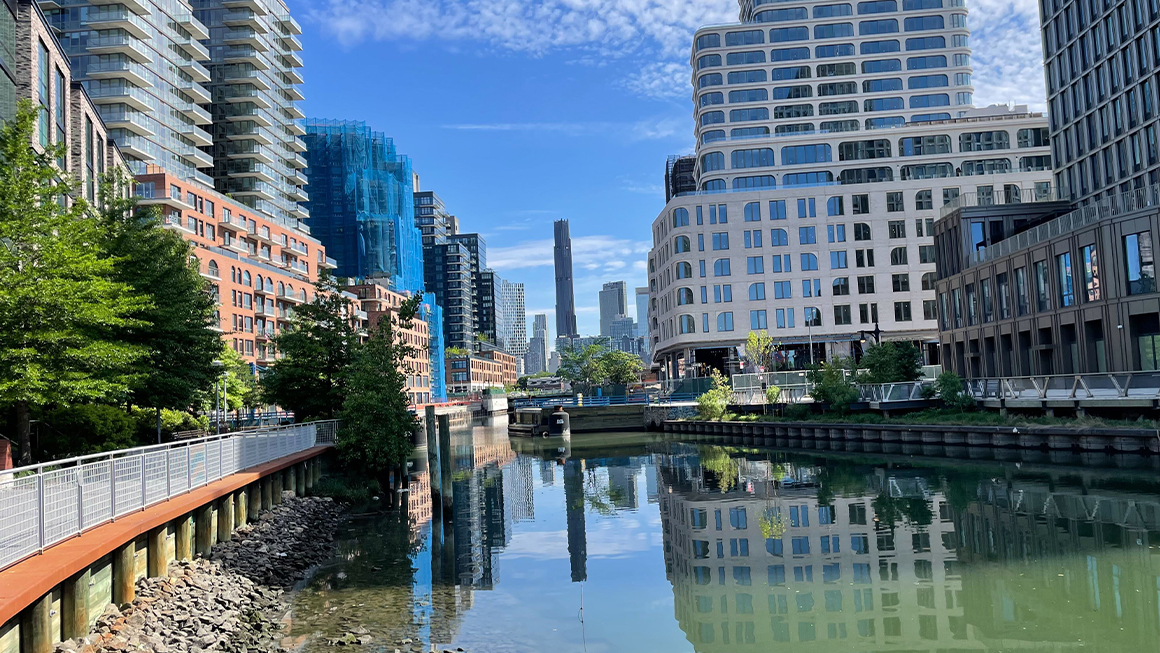
Brooklyn’s Gowanus neighborhood is well known for its Superfund-designated canal, which has suffered from severe sewage overflows and contamination from surrounding industrial uses. But after years of discussion and amid a major canal cleanup campaign, the New York city council and mayor approved an upzoning of a portion of the neighborhood in 2021. The reform allowed for high-density residential development in areas previously used predominantly for industrial purposes.
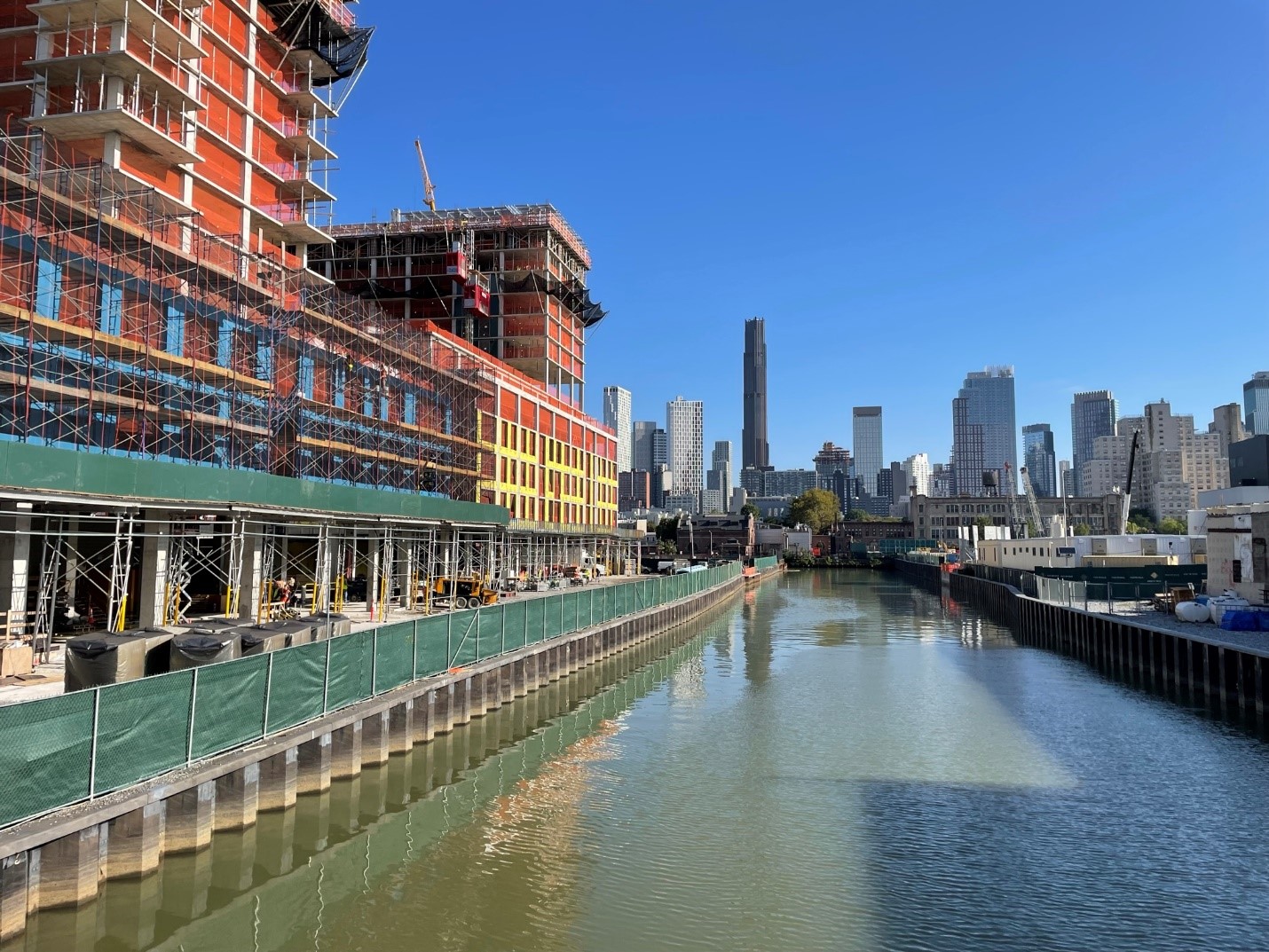
Since the upzoning, there’s been an explosion of housing development, including several developments with hundreds of units each. In our research, we estimate that as of 2025, this upzoning led to the completion of 5,400 more units than would have been built without the upzoning, based on a controlled comparison with parcels that weren’t upzoned.
We’ve identified three reasons why the upzoning in Gowanus enabled significant new housing development.
The affected parcels were large industrial lots well configured for major residential projects. The parcels had relatively low-value buildings, meaning existing uses could be demolished at relatively limited cost and with little reduction in operating revenue for landowners.
The area had a strong housing market. Even before the upzoning, Brooklyn had one of the most expensive housing markets in the country. And though environmental contamination may have held back development in Gowanus before the upzoning, remediation and dredging efforts that began in earnest in 2020 aligned with the upzoning to further increase the neighborhood’s appeal.
The magnitude of the upzoning was significant. The zoning reform increased the average upzoned parcel’s zoning envelope—defined as the maximum number of units that can be built on a parcel, per the zoning ordinance—by 16 units. That’s more than five times the magnitude of the widely applauded upzonings in Minneapolis that overturned single-family-only zoning and allowed for the development of triplexes citywide.
In Fishtown, upzoning coincided with gentrification
Philadelphia’s Fishtown neighborhood is about two miles northeast of Center City, where many of the city’s jobs and amenities are concentrated. It shares some important parallels with Gowanus, including a strong housing market relative to Philadelphia as a whole.
But one difference is that while the rezonings in New York City were undertaken at the neighborhood level, Philadelphia’s 2012 rezoning was not specific to a single neighborhood, or even a cluster of neighborhoods. It fundamentally altered the regulations of entire zoning districts (PDF) and overarching development review processes. In Fishtown, the 2012 rezoning increased the zoning envelope of the average upzoned parcel by 1.5 units (the median was 1 unit). But some parcels saw zoning envelope increases of as many as 78 additional units.
In the years following the city-wide reforms, neighborhood-level zoning designations were also updated to align with the city’s comprehensive plan. Fishtown’s neighborhood-level zoning was updated in 2015.
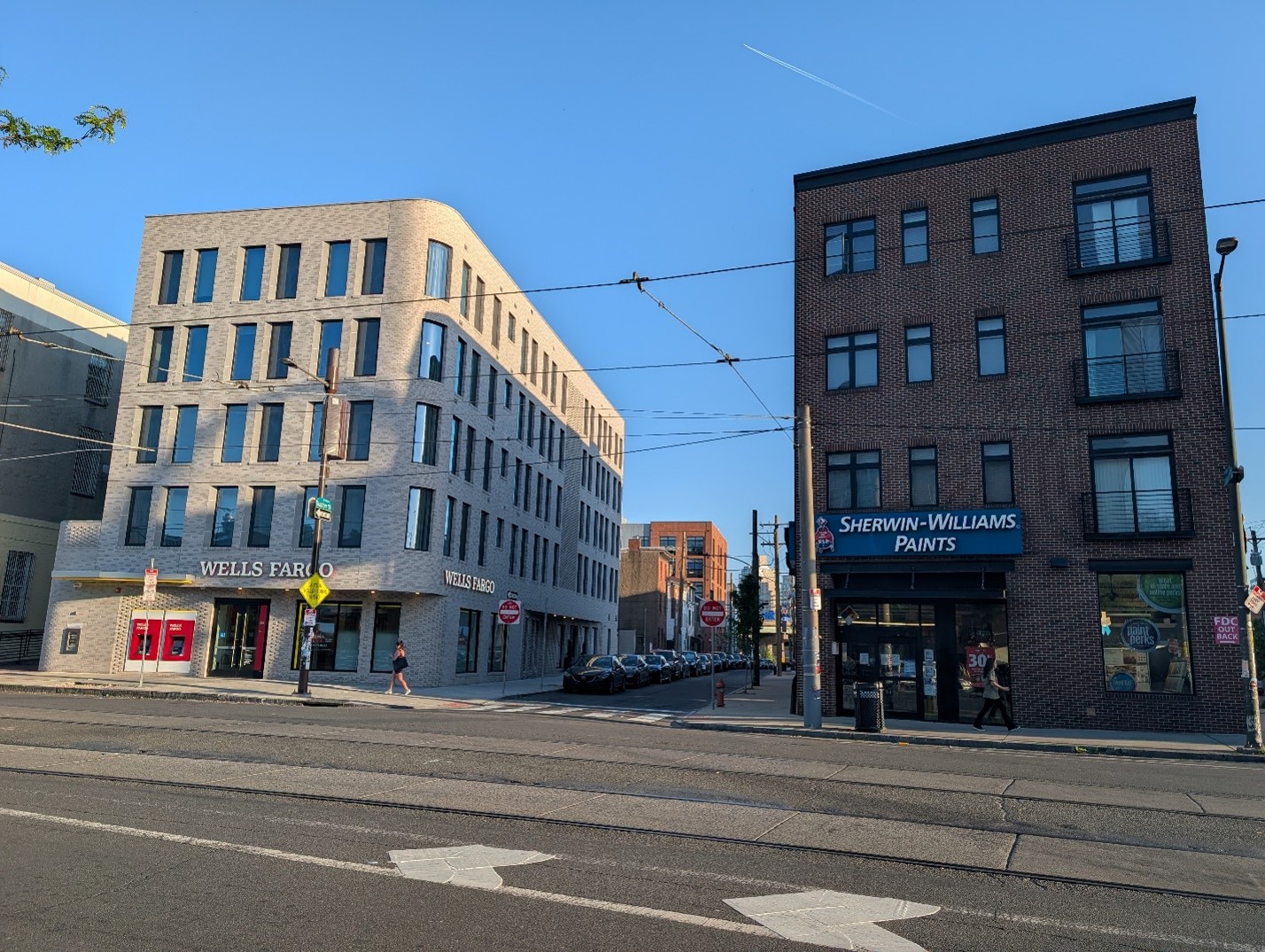
Unlike Gowanus, which was surrounded by high-housing-cost neighborhoods even before upzoning, Fishtown was in the early stages of gentrification when Philadelphia’s rezoning took effect in 2012. And Fishtown was already predominantly residential before upzoning, with rowhomes throughout most of the area and some larger residential buildings located primarily along major roads.
Development in Fishtown after upzoning has largely mirrored the character of the neighborhood’s development before the upzoning. Additional infill rowhomes have slotted into underused areas within existing residential neighborhoods, and parking lots and other low-value uses have been replaced with larger residential buildings along major corridors.
Parcel types, the surrounding housing market, and nearby public amenities affect whether upzonings increase housing supply
Zoning reforms could be part of the solution to housing affordability problems, but only if they meaningfully increase housing supply. Our analysis highlights three factors that influence whether a zoning reform will effectively generate housing development. Decisionmakers and advocates should take them into account when considering land-use reforms as a pathway to affordable housing.
- Formerly industrial and underused parcels are well suited to redevelopment. In Gowanus, large sites previously used for industrial purposes have been converted into high-rise apartment buildings with hundreds of units each. In Fishtown, undeveloped or underused parcels, such as parking lots, have given way to a mix of townhomes and midsize apartment buildings.
- Strong or growing housing markets enable new development under zoning reforms. Fishtown was already beginning to experience gentrification in 2012, while the neighborhoods adjacent to Gowanus have had high housing prices and demand for decades. These demand-side factors allowed developers to profitably develop housing under new zoning regulations. The zoning reforms would likely have had smaller effects in weaker housing markets because upzoning is only effective when zoning—not market demand—is what’s limiting developers’ interest in adding new housing.
- Coordinated investments and nearby public amenities may make upzoning more impactful. Gowanus is well served by the New York City Subway and bus routes, is near the ample green space provided by Prospect Park, and has benefitted from ongoing public investments to remediate environmental contamination. Fishtown is also well served by transit and is a short trip from Center City and its many jobs and amenities. These factors likely helped stabilize and strengthen the neighborhoods’ housing markets.
